AI Pose Detection for Exercise Form: What We Learned Building FIXIT
A phone camera and a pose model can tell you whether your squat is safe. Getting from "detect a skeleton" to "help someone recover" is the hard part.
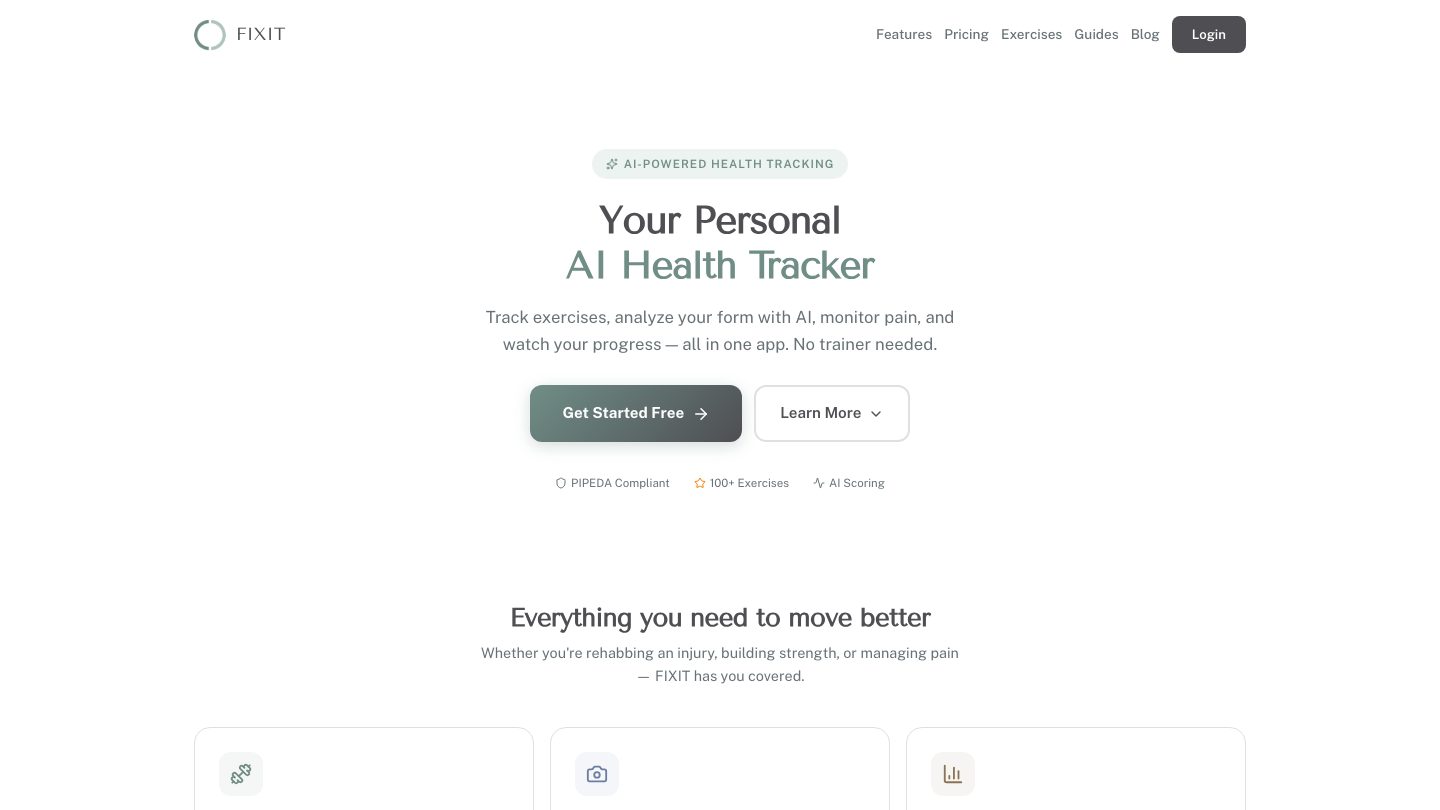
Most people doing rehab or strength work at home have the same problem: nobody is watching. A physiotherapist sees you for thirty minutes a week; the other six days you are guessing. FIXIT is our attempt to close that gap with computer vision that runs on the phone you already own.
What FIXIT does
- AI form analysis. Pose detection tracks key joints through each rep and scores form against the target movement.
- 100+ guided exercises for rehab, fitness and general wellness.
- Pain journaling. Users log pain alongside workouts, so progress is measured in how they feel, not just reps.
- Progress you can see. Trends over weeks make it obvious when something is working — or when to talk to a professional.
- Privacy by design. FIXIT is built to PIPEDA standards, with data stored in Toronto, Canada.
From skeleton to coaching
Off-the-shelf pose models will happily return 33 landmarks per frame. That is the easy 20%. The work that makes it useful:
Movement-specific rules
A good squat and a good shoulder raise fail in different ways. Each exercise needs its own definition of "correct": which joint angles matter, which ranges are safe, and which phase of the rep to judge.
Tolerance for real rooms
Living rooms have bad lighting, loose clothing and furniture in the frame. Smoothing landmarks across frames and rejecting low-confidence readings matters more than squeezing another point of model accuracy.
Feedback humans can act on
"Knee angle 74°" means nothing to most people. "Keep your knee behind your toes" does. Translating geometry into plain coaching is where the product earns trust.
One engine, many front doors
The same pose engine powers white-label experiences for clinics: a branded Pose Challenge kiosk for waiting-room TVs and a Pose Check demo patients can try on their phone. It is a good example of a pattern we use often — build the core AI capability once, then ship it through several products. We wrote more about that approach in Agentic AI: real use cases across industries.
Where computer vision fits in health
FIXIT is not a diagnosis tool and does not try to be. It is a coach between appointments. That framing — AI as support for professionals rather than a replacement — is central to how we think about building AI responsibly.
Try it free at fixit.yourformsux.com, or see the rest of our product family in One studio, many AI products.